
Sill Bearing Sill Bearing

China Rod Ends Bearings Suppliers, Factories

Product Description

Precision Engineered Rod End Joint Bearings

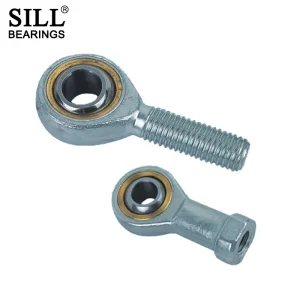
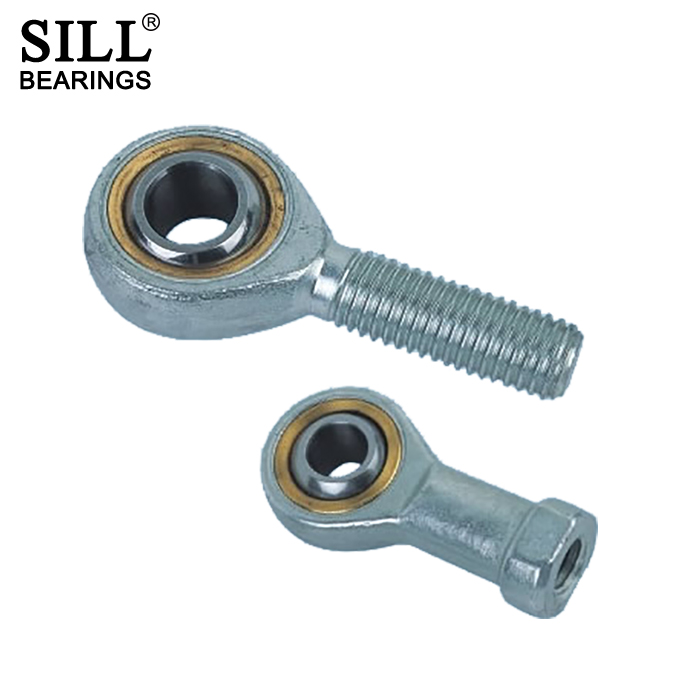
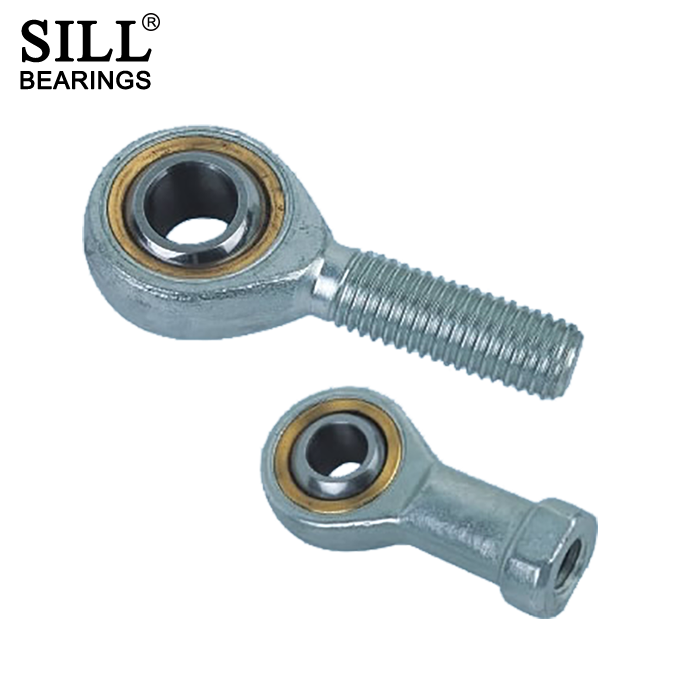
Rod end joint bearings, also referred to as rod end bearings, are a pivotal category of spherical plain bearings engineered for high-precision mechanical linkage systems. As core components in motion transmission, they integrate the functionality of rod ends with the flexible rotation of joint bearings, making them indispensable in scenarios requiring both load-bearing capacity and angular misalignment compensation.

⚙️

Unlike traditional rigid connectors, rod end joint bearings adopt a sophisticated ball-and-socket design—featuring a precision-machined spherical inner race nested within a durable circular housing, paired with an external threaded shank. This structural design enables smooth pivoting and oscillating motion in multi-directional linkages, effectively accommodating axial, radial, and angular misalignments while ensuring stable load transmission.

Material & Performance Optimization
🛡️ Maintenance-Free Configurations

Equipped with PTFE composite liners, providing excellent self-lubricating properties. These eliminate the need for frequent lubrication, ideal for applications with limited maintenance access or harsh environments.

🏗️ Heavy-Duty Steel-on-Steel

Constructed with high-carbon chromium bearing steel, delivering superior load-bearing capacity, impact resistance, and high-temperature tolerance for heavy-load and high-speed operations.

Strict Quality & Manufacturing Standards

All rod end joint bearings undergo strict quality control processes, including precision grinding, heat treatment, and fatigue testing. We ensure full compliance with international standards such as ISO and ANSI, underscoring our commitment to product reliability and professional manufacturing capabilities.

Versatile Industry Applications
  • Automotive Industry: Widely used in steering linkages, suspension systems, and throttle control mechanisms to enhance driving stability and safety.
  • Aerospace Sector: Critical for aircraft control surfaces, engine mounts, and helicopter rotor systems, meeting rigorous requirements for high precision and extreme conditions.
  • Industrial Machinery: Essential in construction equipment, robotics, agricultural machinery, and marine vessels for reliable operation in heavy-load environments.
  • Specialized Fields: Vital roles in railway transportation, theme park rides, and remote-controlled devices.
Tailored Engineering Solutions

Whether in high-volume industrial production or custom-engineered projects, rod end joint bearings provide tailored solutions that balance performance, durability, and cost-effectiveness. Backed by years of experience in bearing manufacturing and technical expertise, we offer comprehensive support from product selection to technical guidance, ensuring the most suitable solutions for specific applications.
Frequently Asked Questions (FAQ)
1. What are the primary benefits of using rod end joint bearings?
They provide a combination of high load-bearing capacity and the ability to compensate for angular misalignment, ensuring smooth motion in complex mechanical linkages.
2. When should I choose maintenance-free rod end bearings?
Maintenance-free bearings with PTFE liners are ideal for applications where lubrication is difficult to perform or where self-lubricating properties are required for cleaner operation.
3. Are these bearings suitable for high-temperature environments?
Yes, especially the heavy-duty steel-on-steel configurations, which are designed to withstand high-carbon chromium steel requirements for impact and temperature resistance.
4. Do your products comply with international ISO standards?
Yes, all products undergo rigorous testing including precision grinding and fatigue tests to meet ISO and ANSI international standards.
5. Can rod end bearings handle both radial and axial loads?
While primarily designed for radial loads, their ball-and-socket design allows them to effectively accommodate combined loads and significant angular misalignments.
6. Which industries utilize these components the most?
They are extensively used in automotive steering, aerospace control systems, industrial robotics, construction machinery, and marine equipment.

Related Products