1 / 2
 Sill Bearing
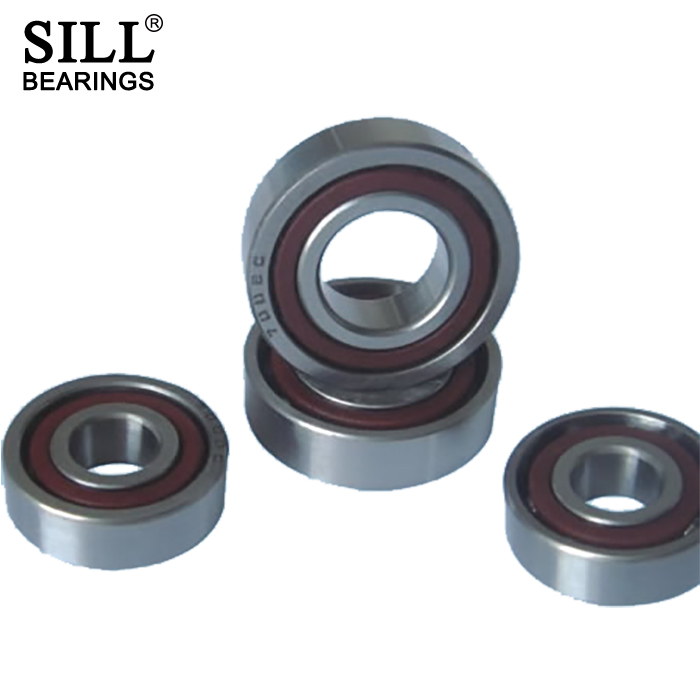
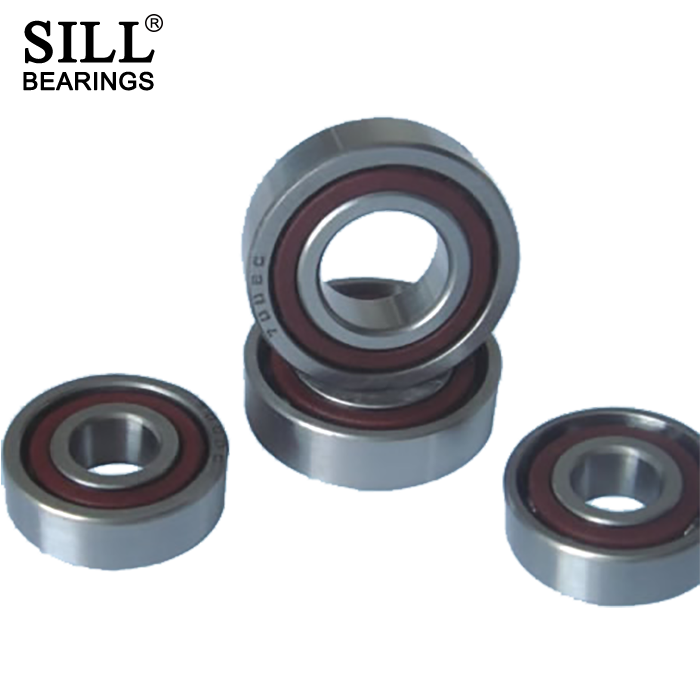
Angular contact ball bearings are precision-engineered mechanical components widely recognized for their exceptional ability to handle combined radial and axial loads—making them a cornerstone in high-performance industrial systems. Unlike deep groove ball bearings that primarily support radial loads, ACBB achieve this versatility by offsetting the raceways of their inner and outer rings, which creates a defined contact angle between the balls and the raceways.
This unique design enables diagonal force transfer, allowing the bearings to efficiently accommodate both radial forces and axial forces, a critical advantage in applications where multiple load types coexist.
Designed to support axial loads in one direction or bidirectional requirements through specialized duplex configurations like back-to-back or face-to-face arrangements.
Available in single-row and double-row variants. Single-row models offer high-speed performance, while double-row models handle complex bidirectional loads.
Manufactured from high-quality bearing steel or ceramic materials with advanced cage designs (brass, steel, or polymer) for extreme environments.
Single-row ACBB: These are valued for their compact design and high-speed performance. They are frequently used in pairs with preload to eliminate internal clearance, ensuring maximum precision in CNC machine spindles and automotive transmissions.
Double-row ACBB: By integrating two rows of balls within a single assembly, these bearings handle axial loads in both directions simultaneously. They support higher radial loads than single-row models, making them ideal for heavy-duty gearboxes and marine propulsion systems.
Advanced engineering ensures durability in harsh conditions. Precision-ground raceways minimize friction and wear, extending service life in high-temperature or high-vibration environments. Cage designs are optimized to reduce centrifugal forces, ensuring smooth circulation at elevated rotational speeds.
From aerospace and robotics to wind turbine generators, angular contact ball bearings provide consistent performance. Factors such as contact angle, preload, and material selection are crucial to optimizing performance for specific application requirements.