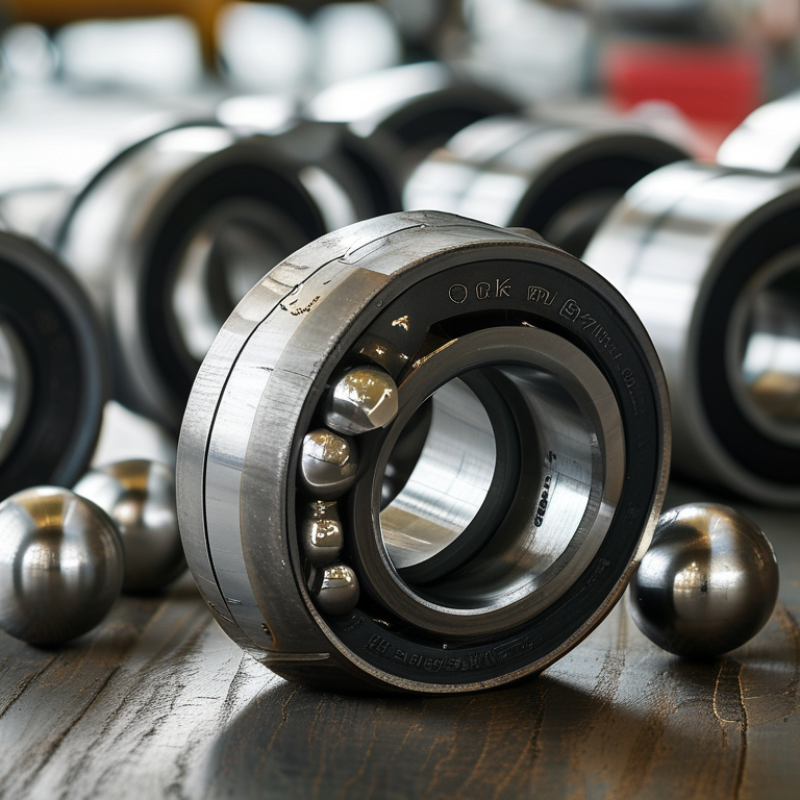
In the competitive world of machinery, Steel Ball Bearings play a crucial role. These precision components reduce friction and enhance performance in various applications. As global demand rises, finding reliable suppliers becomes essential for buyers.
China stands out as a leading manufacturer of Steel Ball Bearings. With numerous suppliers in the market, it can be challenging to identify trustworthy partners. It is key for global buyers to assess quality, service, and expertise. Many suppliers boast advanced technology and skilled workforce. However, some may not meet the expected standards.
When selecting a supplier, consider factors beyond price. Inspect their production process and product materials. Authenticity and certification are vital. Investing time in research prevents future issues. In this article, we explore the top ten Steel Ball Bearings suppliers in China, focusing on their unique strengths and offerings.
Overview of the Steel Ball Bearings Market in China
The steel ball bearings market in China has shown remarkable growth in recent years. Driven by robust industrialization, China has become a leading player in manufacturing and exporting steel ball bearings. These components are crucial for reducing friction in machinery, and their demand is on the rise globally.
Industry experts note that many Chinese suppliers produce high-quality steel ball bearings. The technology used in their production is steadily advancing. However, there are variations in quality among different manufacturers. Some companies focus heavily on innovation, while others may prioritize speed and cost-efficiency. This creates a diverse market landscape that global buyers must navigate carefully.
Competition is fierce, and prices can fluctuate. Potential buyers should consider factors beyond just cost. It’s important to evaluate suppliers based on reliability, quality certifications, and their production capabilities. Some buyers have faced challenges with inconsistent quality. Addressing these issues requires thorough research and communication with suppliers. Ultimately, the right choice can enhance a buyer's operations significantly.
Top 10 Steel Ball Bearings Suppliers in China for Global Buyers
| Supplier Location |
Annual Production Capacity (tons) |
Market Share (%) |
Key Products |
Export Experience (Years) |
| Shandong |
5000 |
15 |
Miniature Bearings, Precision Bearings |
10 |
| Zhejiang |
7000 |
20 |
Ball Bearings, Industrial Bearings |
15 |
| Guangdong |
6000 |
12 |
Automotive Bearings, High-Speed Bearings |
8 |
| Shanghai |
8000 |
18 |
High Precision Bearings, Robotics Bearings |
20 |
| Tianjin |
4500 |
10 |
Heavy Load Bearings, Special Bearings |
5 |
Criteria for Selecting Top Steel Ball Bearings Suppliers
When selecting top steel ball bearings suppliers in China, buyers should focus on several key criteria. Quality is paramount. Suppliers must adhere to international standards like ISO 9001. This ensures consistent quality and performance. A report from the Steel Ball Bearings Association indicates that 70% of manufacturing issues stem from subpar materials. Thus, ensuring material quality can significantly reduce defects.
Another important factor is production capacity. Reliable suppliers should demonstrate scalability. A recent industry analysis suggests that companies with over 500 tons of monthly output are more likely to fulfill large orders efficiently. Additionally, checking customer reviews and case studies can provide insights into a supplier's reliability. Many buyers often overlook this step, which can lead to future supply chain troubles.
Technical support and communication are also essential. Suppliers must provide timely assistance and detailed specifications for their products. Nearly 60% of buyers cite poor communication as a major challenge in sourcing. Therefore, establishing clear channels of communication can enhance collaboration. In this competitive landscape, reflecting on these aspects can lead to more informed supplier choices. It's essential to approach these criteria thoughtfully to establish long-lasting partnerships.
Top 10 Steel Ball Bearings Performance Metrics
List of Leading Steel Ball Bearings Suppliers in China
China is a significant player in the global steel ball bearings market. In 2022, China accounted for over 30% of the global bearing production, reflecting its robust manufacturing capabilities. The country produces a diverse range of ball bearings, catering to various sectors such as automotive, aerospace, and industrial machinery. This demand is driven by a growing emphasis on modernization and automation in manufacturing processes.
Key suppliers in China emphasize innovation and efficiency. Reports indicate that the market for ball bearings is projected to grow at a CAGR of 5.4% from 2023 to 2030. Suppliers are increasingly focusing on quality improvement and sustainable practices. Environmental concerns are reshaping the industry's landscape. Some manufacturers face challenges adapting to new regulations, leading to inconsistencies in material quality. However, proactive companies are investing in advanced technologies to ensure compliance and meet buyer expectations.
The competitive landscape is fierce, with many suppliers vying for attention. Quality control remains a critical concern. Some manufacturers struggle to maintain consistent product standards. This inconsistency can impact long-term relationships with global buyers. Despite these challenges, many suppliers demonstrate potential through continuous improvements and commitment to customer satisfaction. This evolution indicates a promising future for the industry, though vigilance is necessary.
Analysis of Competitive Advantages Among These Suppliers
In the competitive landscape of steel ball bearings in China, suppliers differentiate themselves through several key advantages. One significant factor is production capacity. Leading manufacturers can produce millions of units annually, leveraging advanced automation technologies. Reports indicate that Chinese exports of ball bearings reached approximately $4 billion in 2022, demonstrating the global demand for high-quality components.
Quality control processes are another critical advantage. Many suppliers employ rigorous testing protocols, ensuring that every batch meets international standards. For instance, ISO certification is increasingly common among top players. Yet, this extensive focus on quality sometimes leads to longer lead times. Buyers must weigh the benefits of superior quality against the urgency of their projects.
Additionally, strategic partnerships enhance suppliers' competitive edge. Collaborations with local universities for research and development can yield innovative products. However, some companies struggle with maintaining consistent communication in these partnerships, which can lead to missed opportunities. The evolving market requires suppliers to adapt quickly, reflecting the need for agility in their operations.
Trends and Innovations in the Chinese Steel Ball Bearings Industry
The Chinese steel ball bearings industry is undergoing significant transformation. In 2022, the market size for steel ball bearings reached approximately $5.3 billion, with a projected growth rate of 5.2% annually. Innovation is key to this expansion. Many manufacturers are investing in advanced production technologies, enhancing efficiency and reducing costs. This shift allows for higher precision and durability in bearings, vital for various applications.
Recent trends indicate a rising demand for lightweight materials. These materials can significantly improve performance in aerospace and automotive sectors. The emphasis on sustainability is also evident, as companies strive to reduce their carbon footprint. For instance, using recycled steel can lower emissions in production. However, challenges remain. Some manufacturers face difficulties in adopting these sustainable practices due to the initial investment required.
Furthermore, the ongoing development of smart bearings is noteworthy. These products are integrated with sensors, allowing real-time data collection. This technology enhances maintenance and reliability. While the potential is enormous, the industry must navigate the complexities of integrating smart technology with traditional manufacturing processes. The path forward is filled with opportunities yet requires careful consideration of practical implementations.
FAQS
: Quality is paramount. Suppliers must adhere to international standards for consistent performance.
Poor material quality can lead to 70% of manufacturing issues. This increases defects and impacts reliability.
Suppliers with over 500 tons of monthly output can manage large orders better. Scalability ensures reliability.
Checking customer reviews and case studies is essential. Ignoring this can lead to future supply chain issues.
Poor communication is a significant challenge. Timely assistance and clear channels can enhance collaboration.
Environmental regulations create inconsistencies in material quality. Many suppliers struggle to adapt effectively.
The market is projected to grow due to modernization and automation. Suppliers focus on quality improvement.
Suppliers must invest in advanced technologies. Compliance with regulations is vital for sustaining quality standards.
Thoughtful consideration of quality, capacity, and communication can establish better partnerships.
Inconsistencies can damage long-term relationships with global buyers. Vigilance is necessary to maintain satisfaction.
Conclusion
The article "Top 10 Steel Ball Bearings Suppliers in China for Global Buyers" provides a comprehensive overview of the steel ball bearings market in China, highlighting critical criteria for selecting top suppliers in this sector. It outlines essential factors such as quality, pricing, and production capabilities that buyers should consider when evaluating potential suppliers.
Additionally, the article lists leading steel ball bearings suppliers in China and analyzes their competitive advantages, discussing how factors like innovation and technology adoption play a role in their success. Finally, it addresses current trends and innovations within the Chinese steel ball bearings industry, emphasizing the dynamic nature of this market and its significance for global buyers seeking reliable suppliers.
 Sill Bearing