
Sill Bearing Sill Bearing

China Top Small Ball Bearings Manufacturers Suppliers

Time:2026-10-05 Author:Sophia
0%

China’s small bearing sector has become a critical link in global equipment manufacturing. Small Ball Bearings support electric motors, medical instruments, robotics, power tools, bicycles, and precision automation. Their size is modest, but their tolerances are not.

Recent industry research shows steady demand. Fortune Business Insights estimated the global ball bearing market at approximately USD 19.46 billion in 2023. Its report also projects continued growth through 2032, supported by automation, electric vehicles, and industrial machinery. The China Bearing Industry Association has reported strong domestic production capacity, while emphasizing upgrades in precision, materials, and manufacturing efficiency.

That growth creates opportunities for international buyers. It also creates confusion. Not every supplier claiming “high precision” offers the same roundness, noise control, or service life. A polished catalog is not proof.

China’s leading manufacturers usually differentiate themselves through steel quality, heat treatment, grinding accuracy, sealing design, and inspection systems. Reliable suppliers should provide measurable specifications, such as ABEC or ISO tolerance grades, radial clearance, grease type, load ratings, and operating temperature. Factory audits, sample testing, and traceable quality records remain essential.

Reports from SKF and NSK consistently connect bearing performance with lubrication, contamination control, alignment, and maintenance practices. This matters because even an excellent bearing can fail inside a poorly designed assembly. That point is often overlooked.

This guide examines China’s top Small Ball Bearings manufacturers and suppliers from a practical sourcing perspective. It considers product range, production capability, certifications, customization, export experience, and technical support. Some rankings may remain subjective. Supplier performance can also change over time. Buyers should verify current evidence before placing large orders.
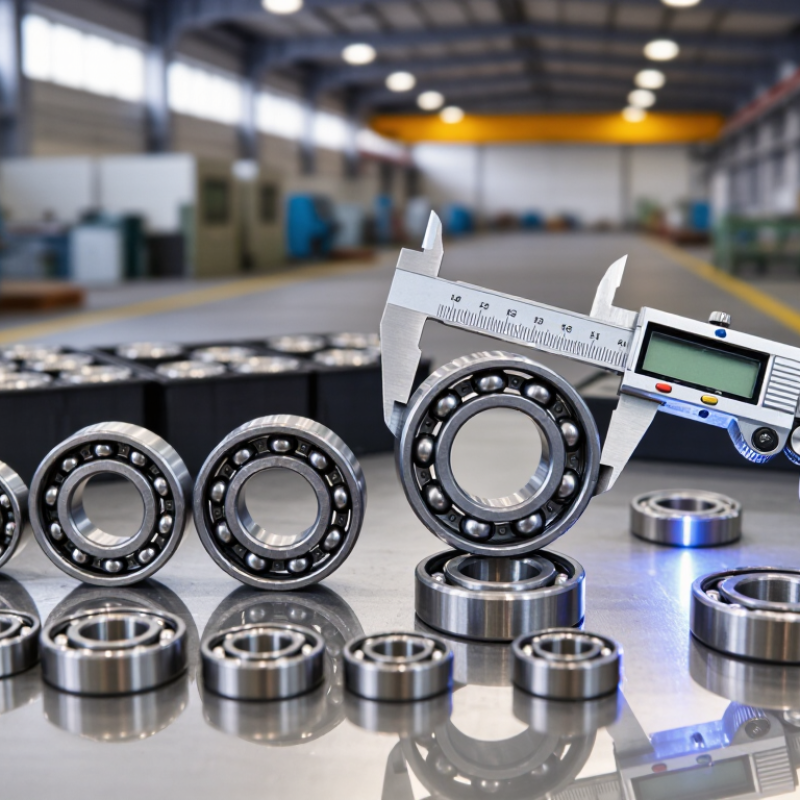
China Top Small Ball Bearings Manufacturers Suppliers

What Small Ball Bearings Are and How They Work

Small ball bearings are compact mechanical parts that support rotating shafts with less friction. Each bearing usually contains an inner ring, outer ring, balls, and a cage. The balls roll between both rings, replacing much of the sliding contact with rolling contact.

Small parts matter.

In practical equipment, these bearings guide motors, fans, pumps, tools, and precision instruments. Radial loads press across the bearing, while axial loads act along the shaft. A suitable bearing must match both forces, speed, temperature, and available space. Seals help block dust and retain lubricant, but they may increase resistance slightly. Open bearings can rotate freely, yet they need cleaner operating conditions.

Manufacturing quality depends on accurate grinding, controlled heat treatment, and careful assembly. Suppliers should provide dimensional records, material information, and inspection results. During workshop checks, unusual noise, vibration, or rising temperature often indicates poor alignment or contamination. Measuring only the outside diameter is not enough. Internal clearance and surface finish also affect service life.

A common mistake is choosing the smallest bearing simply because it fits the housing. That choice may fail under shock loads or continuous speed. I have also found that lubrication advice is sometimes too general. Real conditions deserve closer review. Even a well-made bearing can perform poorly when installed with excessive force, incorrect preload, or a bent shaft.

Key Types, Materials, Sizes, and Performance Specifications

China Top Small Ball Bearings Manufacturers Suppliers

Small ball bearings support miniature motors, medical instruments, robotics, fans, and precision tools. Small does not mean simple. Buyers should match bearing design with load direction, speed, noise limits, and available installation space.

Deep-groove bearings suit combined radial and light axial loads. Angular-contact types handle higher axial forces at controlled contact angles. Thrust bearings manage axial loads, but they should not replace radial designs.

Miniature bearings often use chrome steel for strength and consistent fatigue life. Stainless steel offers better corrosion resistance in humid equipment. Hybrid bearings combine steel rings with ceramic balls, reducing friction and electrical damage. The choice is useful, but the cost can rise sharply.

Measure twice.

Common sizes include 3 mm to 10 mm bores, with outside diameters and widths selected by housing design. Sealed versions, such as rubber-sealed or metal-shielded types, help retain grease and block dust.

Performance specifications should include dynamic load rating, static load rating, limiting speed, noise level, clearance, and dimensional tolerance. ISO tolerance classes provide a clearer comparison than vague “high precision” claims.

A dependable supplier should provide material certificates, inspection records, batch traceability, and sample testing. Ask how speed ratings were measured. Some catalogs appear precise but omit lubrication conditions. That detail matters. Testing torque, temperature rise, vibration, and actual service life can reveal problems early. No selection is perfect; a quieter bearing may carry less load, while tighter clearance may increase heat during continuous operation.

Top Small Ball Bearing Manufacturers in China

Top Small Ball Bearing Manufacturers in China

Top small ball bearing manufacturers in China combine precision machining with flexible production capacity. They commonly serve medical devices, miniature motors, robotics, instruments, and household equipment. The best suppliers control inner diameter, outer diameter, radial clearance, noise, and rotational smoothness. Small errors matter. A few microns can change assembly performance.

Experienced buyers should examine manufacturing evidence, not only attractive catalogs. Ask for material certificates, dimensional inspection records, heat-treatment details, and batch traceability. ISO 9001 certification can support process control, but it does not replace independent verification. Request samples from the same production line used for mass orders. Check vibration, starting torque, temperature rise, and grease compatibility under realistic loads.

No factory is perfect. That deserves attention. In practical sourcing, suppliers may report excellent tolerances while overlooking packaging damage or inconsistent cleaning. A reliable manufacturer explains these risks openly and proposes corrective action. Review factory equipment, inspection frequency, export experience, and response times. Confirm whether quality reports match the actual shipment. Independent testing remains useful for critical applications, especially when bearings operate continuously or in dusty environments. A supplier that welcomes audits usually provides stronger evidence than one offering only low prices. Even then, specifications should be reviewed carefully before approval.

China Top Small Ball Bearings Manufacturers Suppliers - Top Small Ball Bearing Manufacturers in China

Typical small ball bearing categories and purchasing specifications
Bearing Category Typical Bore Range Common Construction Typical Materials Sealing or Shielding Typical Applications Key Standards or Requirements
Miniature Deep-Groove Ball Bearings Approximately 1–10 mm Single-row radial design for combined radial and limited axial loads Chrome steel rings and balls; stainless steel options available Open, metal-shielded, or contact-sealed versions Small motors, instruments, model equipment, fans, and precision mechanisms ISO 15 boundary dimensions; ISO 492 accuracy classes
Flanged Miniature Ball Bearings Approximately 1–10 mm Radial bearing with an integral flange on one ring Chrome steel or corrosion-resistant stainless steel Usually supplied with shields or seals for contamination control Compact housings, guide rollers, printers, sensors, and small gear systems ISO dimensional tolerances; flange geometry must match the housing design
Stainless-Steel Miniature Bearings Approximately 1–12 mm Single-row radial construction for environments requiring corrosion resistance Commonly corrosion-resistant stainless steel such as AISI 440C Open, shielded, or sealed configurations Medical instruments, food-processing equipment, laboratory devices, and humid environments Material certificate, corrosion-resistance requirements, and ISO 492 tolerance class
Hybrid Ceramic Ball Bearings Commonly 3–12 mm Steel rings combined with ceramic rolling elements Bearing steel rings with silicon-nitride ceramic balls Open, shielded, or sealed; grease selection is application-dependent High-speed spindles, laboratory equipment, robotics, and electrically sensitive systems Electrical insulation, speed rating, preload, and ISO 492 accuracy requirements
Shielded Small Deep-Groove Bearings Approximately 2–12 mm Radial bearing with non-contact metal shields Chrome steel or stainless steel, depending on the operating environment Metal shields help retain grease and reduce entry of larger particles Electric motors, office equipment, pumps, fans, and general machinery Specify shield type, internal clearance, grease, noise level, and tolerance class
Sealed Small Ball Bearings Approximately 2–15 mm Radial bearing with contact seals on one or both sides Chrome steel, stainless steel, and polymer sealing elements Rubber or polymer contact seals provide stronger contamination protection than shields Outdoor devices, small conveyors, household equipment, and dusty operating areas Confirm seal material, lubricant compatibility, temperature range, and rotational speed
Miniature Thrust Ball Bearings Approximately 2–10 mm Axial bearing designed primarily for thrust loads in one direction Hardened bearing steel; stainless versions for corrosive conditions Usually open; shielding depends on the bearing assembly Turntables, screw mechanisms, valve assemblies, and low-load axial positioning systems Axial load direction, installation orientation, limiting speed, and ISO dimensional requirements

Note: Specifications shown are typical industry ranges for small ball bearings. Exact dimensions, load ratings, speed limits, tolerances, lubrication, and service life must be confirmed from the selected supplier’s technical drawing and test documentation.

How to Evaluate Chinese Bearing Suppliers

Evaluating Chinese small ball bearing suppliers requires more than comparing prices. Ask for factory registration details, production capacity, and quality certifications. Then verify whether these documents match the actual facility. A polished catalog proves little.

Request samples from the same production line used for regular orders. Check noise, rotation smoothness, radial play, surface finish, and packaging. Confirm steel grade, lubrication type, tolerance class, and sealing design. Reliable suppliers should provide inspection records and traceability codes. Independent testing can reveal differences that factory reports miss.

Communication also matters. Measure how clearly the supplier answers technical questions and handles a failed sample. Confirm minimum order quantities, lead times, replacement procedures, and shipping terms in writing. A site audit is useful, but it cannot expose every weakness. No checklist is perfect. One overlooked detail, such as poor moisture protection, may damage an entire shipment. Careful buyers should compare at least three suppliers and keep evidence for every decision.

Applications, Quality Standards, and Export Capabilities

China Top Small Ball Bearings Manufacturers Suppliers: Applications, Quality Standards, and Export Capabilities

Small ball bearings support miniature motors, medical instruments, robotics, pumps, and precision tools. Their applications demand quiet rotation and stable friction. Fortune Business Insights reported that the global ball bearing market reached about USD 19.99 billion in 2023. It also forecasts continued growth through 2032. This creates opportunity, but price alone is a weak buying signal. A supplier should explain steel grade, heat treatment, lubricant choice, and cage design. Real production experience matters when bearings face dust, vibration, or frequent start-stop cycles.

Quality claims should connect with measurable standards. ISO 492 defines dimensional accuracy and tolerance classes. ISO 199 addresses static load ratings, while ISO 76 supports static load calculations. Reliable manufacturers provide inspection records, material certificates, noise testing, and batch traceability. Export capability also requires careful packaging. Vibration-resistant cartons, moisture protection, multilingual documents, and consistent HS classification reduce delays. However, not every supplier controls every process internally. That limitation deserves honest disclosure. It may affect lead time and quality consistency.

Tips: Request samples from three production batches. Check bore diameter, radial clearance, noise, and grease distribution. Ask for an inspection report, not only a certificate. Confirm whether testing follows ISO procedures or an internal method. Export references can reveal practical performance. A supplier with clear answers is often safer than one promising perfection. No factory is flawless. The useful question is how quickly it detects and corrects variation.

China Top Small Ball Bearings Manufacturers Suppliers: Applications, Quality Standards, and Export Capabilities

This chart compares standard dimensions of widely used small deep-groove ball bearings. The listed bore, outside diameter, and width values are based on commonly specified bearing dimensions under ISO 15. These compact bearings are frequently used in electric motors, fans, pumps, small gearboxes, office equipment, automation systems, and light industrial machinery.

For quality verification, buyers commonly reference ISO 492 for dimensional and running accuracy, ISO 199 for axial internal clearance requirements, and ISO 281 for bearing life calculations. Export documentation typically identifies ball bearings under HS code 8482.10, while packaging, traceability, inspection reports, and certificates of conformity support international supply requirements.

FAQS

What applications commonly use small ball bearings?

They support miniature motors, medical instruments, robotics, fans, pumps, and precision tools. Quiet rotation matters. Small errors matter.

How should buyers choose between bearing types?

Deep-groove bearings handle radial and light axial loads. Angular-contact bearings suit higher axial forces. Thrust bearings mainly handle axial loads.

Which materials are commonly used for miniature bearings?

Chrome steel offers strength and consistent fatigue life. Stainless steel resists humid conditions better. Ceramic balls can reduce friction and electrical damage.

What bearing sizes are usually available?

Common bores range from 3 to 10 millimeters. Outside diameter and width must match the housing. Measure twice.

Are sealed or shielded bearings better for dusty equipment?

Rubber seals retain grease and block dust effectively. Metal shields offer protection with different friction behavior. Neither design solves every contamination problem.

Which specifications should buyers compare?

Review dynamic load rating, static load rating, limiting speed, noise, clearance, and dimensional tolerance. ISO tolerance classes provide clearer comparisons.

What evidence should a supplier provide before approval?

Request material certificates, inspection records, heat-treatment details, and batch traceability. Samples should come from the same production line as mass orders.

How can buyers test bearing quality before large orders?

Test bore diameter, starting torque, vibration, noise, temperature rise, and grease distribution. Use realistic loads and speeds. Testing helps.

What export details can affect delivery and quality?

Moisture protection, strong cartons, clear documents, and consistent customs classification can reduce delays. Packaging damage is easy to overlook.

Is the lowest price a reliable buying signal?

Not usually. A cheaper bearing may have weaker consistency, poorer packaging, or unclear lubrication data. No factory is flawless.

Conclusion

Small Ball Bearings are compact precision components designed to reduce friction and support rotational motion in equipment with limited space or light to moderate loads. This overview explains their basic structure and working principles, including how rolling elements, raceways, cages, seals, and lubrication contribute to smooth and reliable operation. It also introduces common bearing types, material options, size ranges, load ratings, speed capabilities, accuracy grades, and environmental performance considerations.

The article further examines China’s small ball bearing manufacturing sector without focusing on individual brands. It outlines practical methods for evaluating suppliers, such as reviewing production capabilities, quality control procedures, testing equipment, certifications, customization services, communication, lead times, and export experience. Applications in machinery, electronics, automotive systems, medical devices, tools, and automation are also discussed, along with the importance of recognized quality standards, traceability, packaging, and dependable international logistics.

Sophia

Sophia

Sophia is a dedicated marketing professional with an exceptional depth of knowledge about her company's products and services. With a keen understanding of market trends and customer needs, she crafts insightful blog posts that not only inform but also engage readers, enriching the company’s online......