
Sill Bearing Sill Bearing

Top 10 Shaft Roller Bearing Manufacturers in China

Time:2026-10-28 Author:Amelia
0%

China’s bearing industry has moved far beyond low-cost production. Today, many manufacturers combine CNC grinding, automated inspection, heat treatment, and application engineering. This progress makes supplier selection more demanding.

A Shaft Roller Bearing may look simple on a drawing. In service, its performance depends on steel cleanliness, roller geometry, raceway hardness, lubrication, mounting accuracy, and contamination control. A small alignment error can create visible wear marks within weeks. Noise, vibration, and unexpected temperature rise often reveal problems before complete failure.

Bearing researcher Tedric A. Harris emphasized a practical truth: “Bearing life is not determined by load alone.” That principle guides this overview of the Top 10 Shaft Roller Bearing Manufacturers in China. The selection considers manufacturing experience, dimensional consistency, testing capacity, customization skills, export reliability, and technical support. It also examines how each company responds to real operating conditions, including heavy radial loads, limited installation space, dusty workshops, and continuous industrial duty.

The list is not a perfect verdict. No ranking can represent every buyer’s priorities. A supplier strong in automotive volume may not suit a mining application. Another may offer excellent prototypes but limited global service. Buyers should verify material certificates, tolerance data, fatigue testing, sealing performance, and after-sales response before placing large orders.

Experience matters.

The strongest manufacturers do more than sell components. They help customers choose the correct clearance, lubricant, cage design, and installation method. This article introduces the companies worth closer evaluation, while leaving room for independent testing and careful technical judgment.
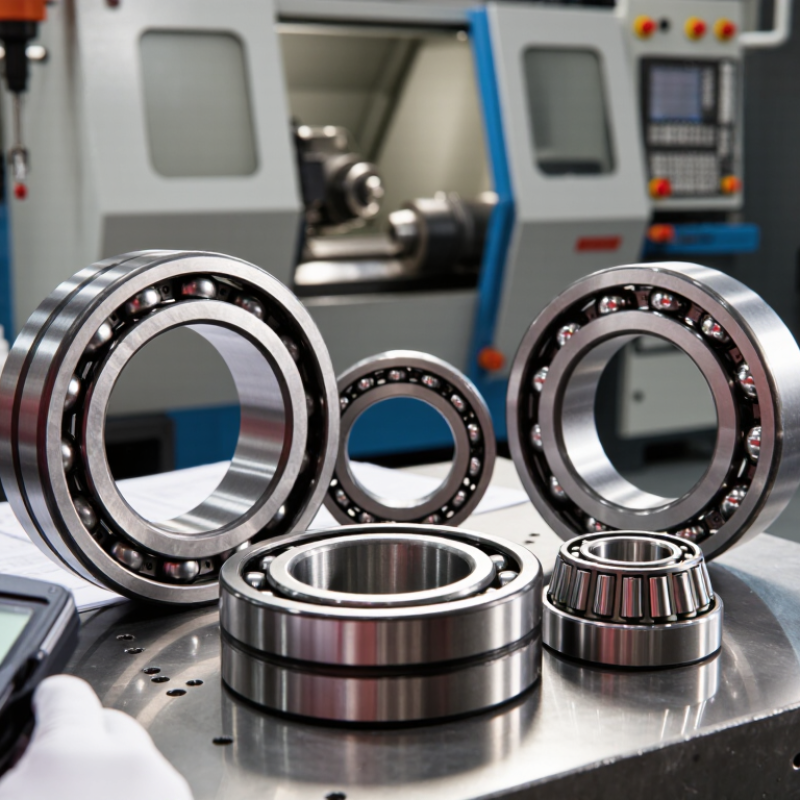
Top 10 Shaft Roller Bearing Manufacturers in China

Shaft Roller Bearings: Definition, Structure, and Key Functions

Shaft roller bearings support rotating shafts while reducing friction and controlling radial loads. The term is not perfectly standardized. In practice, it often describes cylindrical or needle roller designs mounted around a shaft. A typical unit contains a hardened inner ring, rollers, a cage, and an outer raceway. Needle rollers are thin and numerous, so they provide high load capacity within limited radial space. Compact, but not forgiving.

The structure determines performance. Rollers distribute force along contact lines, unlike the smaller contact points found in ball bearings. This design improves stiffness and load handling. However, axial loads usually require flanges, thrust washers, or a separate bearing arrangement. Lubrication remains critical. Dust, incorrect viscosity, and shaft misalignment can quickly mark the raceway. ISO 281 defines basic rating life as the operating life reached by 90% of identical bearings under stated conditions. That figure is useful, but field conditions are rarely identical.

Market evidence supports careful selection. Fortune Business Insights’ 2024 bearing-market assessment values the global sector above USD 120 billion, with industrial machinery among its major demand areas. Grand View Research also identifies automotive and industrial equipment as important growth segments. These reports show scale, not guaranteed service life. A catalog load rating may look impressive. It can still fail early under vibration, poor fits, or contaminated grease. Engineers should verify shaft hardness, clearance, speed, temperature, and actual load cycles before choosing a supplier.

Top 10 Shaft Roller Bearing Manufacturers in China

Shaft Roller Bearings: Definition, Structure, and Key Functions

This comparison shows the primary load directions supported by common shaft roller bearing designs. A value of 1 indicates that the bearing type is generally designed to support the load direction, while 0 indicates that the direction is not its primary load function. Cylindrical roller bearings with an NUP configuration, spherical roller bearings, and tapered roller bearings can support combined radial and axial loads; standard needle roller bearings are primarily intended for radial loads.

How to Evaluate Shaft Roller Bearing Manufacturers in China

How to Evaluate Shaft Roller Bearing Manufacturers in China

Evaluating shaft roller bearing manufacturers requires more than comparing catalog prices. Visit the factory, or request a live video inspection. Check machining lines, heat-treatment equipment, inspection rooms, and storage conditions. A clean floor helps, but it proves little alone. Ask for material certificates, dimensional inspection records, and batch traceability documents. Reliable suppliers should explain tolerance control without vague sales language.

Request samples from the same production process used for larger orders. Measure shaft diameter, roller clearance, surface finish, and running noise with calibrated instruments. Review load ratings, lubrication options, operating temperatures, and expected service life. Independent laboratory reports can strengthen confidence, especially for safety-critical machinery. Do not accept copied certificates without verifying their issuing organization.

Communication also reveals manufacturing discipline. Can the supplier answer technical questions clearly? Do engineers join discussions, or does every answer pass through sales staff? Ask how they handle nonconforming parts, replacement claims, and design changes. A written corrective-action report is more useful than a quick apology. My own evaluation method still has weaknesses: a successful sample cannot guarantee stable mass production. Seasonal staffing, raw material changes, and rushed delivery may alter results. Keep an audit trail, repeat inspections, and leave room for doubt.

Top 10 Shaft Roller Bearing Manufacturers in China

Top 10 Shaft Roller Bearing Manufacturers in China

China’s shaft roller bearing sector serves motors, conveyors, gearboxes, pumps, and agricultural equipment. A practical top-ten review should examine more than factory size. It should compare steel cleanliness, heat treatment, sealing quality, dimensional control, and delivery stability. Grand View Research estimates the global bearing market reached about USD 128.5 billion in 2023. It also projects an 8.5% compound annual growth rate from 2024 to 2030. This demand increases pressure on Chinese producers to improve traceability and fatigue performance.

ISO 281 remains essential when checking rating life calculations. ISO 15243 also helps classify damage, including pitting, smearing, and overheating. During supplier audits, inspect grinding marks under magnification. Ask for hardness records, radial-clearance reports, and batch-level material certificates. A polished surface is not proof of reliable performance. That assumption can fail. The strongest manufacturers usually combine automated inspection with experienced final inspectors, although this balance is not always consistent.

Tips: Request samples from three production batches. Measure bore deviation, noise, vibration, and temperature rise under identical loads. Confirm whether quoted life uses actual operating loads or laboratory assumptions. Also check packaging for oil separation and moisture protection. A low price may reflect thinner quality controls, but a high price does not guarantee better service. That point deserves more testing.

Top 10 Shaft Roller Bearing Manufacturers in China

Rank Manufacturer Profile Primary Product Focus Applicable Technical References Common Bearing Materials Typical Precision Options Typical Application Areas
1 Manufacturer Profile 01 Cylindrical roller bearings for shaft-support applications ISO 15 for boundary dimensions; ISO 492 for radial bearing tolerances Through-hardened chromium bearing steel; machined steel rings Normal, P6, and P5 classes depending on product series Industrial gearboxes, electric motors, pumps, conveyors, and general machinery
2 Manufacturer Profile 02 Single-row and double-row cylindrical roller bearings ISO 15; ISO 199 for radial internal clearance; ISO 492 GCr15-equivalent high-carbon chromium steel; polymer or steel cages Normal, P6, and P5 options for rotating equipment Machine tools, transmission systems, compressors, and material-handling equipment
3 Manufacturer Profile 03 Full-complement and high-load cylindrical roller bearings ISO 15; ISO 492; ISO 199 clearance categories Hardened bearing steel with optional surface treatments for demanding duty Normal and P6; selected series available in tighter tolerance grades Heavy-duty reducers, steel-processing machinery, cranes, and mining equipment
4 Manufacturer Profile 04 Needle roller bearings and compact shaft-bearing assemblies ISO 1206 for needle roller bearing dimensions; ISO 492 where applicable Hardened chromium steel; stamped or machined steel cages Normal and P6 options, subject to series and bore size Automotive components, printing equipment, textile machines, and compact gear drives
5 Manufacturer Profile 05 Spherical roller bearings for shaft misalignment tolerance ISO 15; ISO 492; ISO 199 for internal-clearance classification Through-hardened bearing steel; brass or steel cage configurations Normal and P6 classes for standard industrial service Fans, crushers, vibrating screens, conveyors, and bulk-material systems
6 Manufacturer Profile 06 Tapered roller bearings for combined radial and axial loads ISO 355 for tapered roller bearing dimensions; ISO 492 for tolerances Case-hardened or through-hardened chromium bearing steel Normal and P6 options; matched assemblies available for selected designs Wheel hubs, axle systems, industrial gearboxes, construction equipment, and machine tools
7 Manufacturer Profile 07 Split and specialized roller bearings for maintenance-sensitive equipment ISO 15 or ISO 1206 according to bearing design; ISO 492 where applicable Hardened bearing steel; corrosion-resistant options for selected environments Normal class with application-specific clearance control Large fans, marine machinery, paper mills, pumps, and difficult-access shaft positions
8 Manufacturer Profile 08 Sealed roller bearings for contamination-prone environments ISO 15; ISO 492; manufacturer-defined sealing and grease specifications Chromium bearing steel; nitrile rubber or equivalent sealing materials Normal and P6 options, depending on seal design and operating speed Agricultural machinery, conveyors, food-processing support equipment, and outdoor systems
9 Manufacturer Profile 09 High-speed cylindrical roller bearings for precision rotating shafts ISO 15; ISO 492; ISO 199; application-specific vibration and balance requirements High-cleanliness bearing steel; optional ceramic rolling elements for selected designs P5 and tighter application-specific grades where specified Machine-tool spindles, high-speed motors, compressors, pumps, and test equipment
10 Manufacturer Profile 10 Customized roller bearings and replacement bearing assemblies ISO 15, ISO 492, ISO 199, or ISO 355 according to bearing construction GCr15-equivalent steel; stainless steel and engineered cage options for special orders Normal, P6, and P5 options subject to design validation Custom machinery, industrial maintenance, replacement parts, automation, and OEM equipment
Technical references and material descriptions are based on commonly used international bearing standards and industry practices. Manufacturer names and brand-specific data are intentionally omitted.

Product Range, Manufacturing Strengths, and Industry Applications

China’s top ten shaft roller bearing manufacturers typically cover cylindrical, needle, tapered, spherical, and thrust roller bearings. Many also produce flanged units, sealed assemblies, precision sleeves, and custom shaft-bearing systems. This range supports both standard replacement work and engineered equipment.

Their manufacturing strengths often include automated turning, heat treatment, grinding, and assembly inspection. Larger facilities may use CNC machines, coordinate measuring systems, vibration testers, and controlled-cleanliness workshops. In practical sourcing, I would check material certificates, hardness records, radial-clearance data, and batch traceability. A polished catalog is not enough. Production consistency matters more.

These bearings serve electric motors, agricultural machinery, conveyors, gearboxes, pumps, construction equipment, and wind-energy systems. Heavy-load applications need strong fatigue resistance and stable lubrication performance. High-speed machinery needs accurate geometry and low vibration. Harsh environments may require special seals, coatings, or corrosion-resistant materials. Custom designs can reduce installation space, but they may increase lead time and validation costs. No manufacturer is perfect. Some suppliers offer excellent machining but weaker documentation, while others provide strong testing but limited customization. Buyers should compare samples, audit process controls, and confirm application data before approving volume orders.

How to Select the Right Chinese Shaft Roller Bearing Supplier

Selecting a Chinese shaft roller bearing supplier requires more than comparing unit prices. Start with the bearing’s actual working conditions: radial load, speed, shaft diameter, temperature, lubrication, and expected service life. A supplier should explain how its design matches these requirements. Vague answers are a warning sign.

Request material certificates, heat-treatment records, dimensional reports, and batch traceability. Check critical tolerances, surface finish, hardness, and cage performance. Ask for samples from normal production, not specially prepared pieces. A perfect sample can mislead. In practical sourcing work, small differences in roundness or clearance often appear only after extended testing. Independent testing can confirm noise, vibration, friction, and load performance.

Visit the factory when possible, or arrange a live video audit. Observe inspection equipment, storage conditions, cleaning procedures, and final packing. Experienced staff should identify common failure causes without relying on sales language. Review their response time, engineering support, replacement policy, and ability to maintain consistent batches. Request references from similar applications, while protecting confidential information. The lowest quotation is rarely the safest choice. A slightly higher price may cover better steel, tighter inspection, and steadier delivery. Still, do not assume expensive means reliable. Compare evidence, not promises. Let technical data, sample results, and clear communication guide the decision.

FAQS

What is a shaft roller bearing?

It supports a rotating shaft while reducing friction and controlling radial loads. It usually contains an inner ring, rollers, a cage, and an outer raceway.

Why are needle rollers useful in compact machinery?

Needle rollers are thin and numerous. They provide high load capacity in limited radial space. Compact, but not forgiving.

How do roller bearings carry loads?

Rollers spread force along contact lines. This improves stiffness and radial-load handling. Axial loads usually need flanges, thrust washers, or another bearing arrangement.

Why is lubrication important?

Lubrication protects the raceway and limits heat. Dust, wrong viscosity, or contaminated grease can cause early damage. Small mistakes matter.

What conditions should engineers check before selection?

Check shaft hardness, clearance, speed, temperature, and real load cycles. Misalignment and vibration also deserve attention. A catalog rating is only a starting point.

How is bearing rating life normally described?

A standard life calculation describes operation achieved by 90% of identical bearings. Actual machines rarely match laboratory conditions. Treat the number carefully.

What should buyers inspect during supplier evaluation?

Request material certificates, hardness records, clearance reports, and batch traceability. Inspect grinding marks under magnification. Also measure noise, vibration, and temperature rise.

How can buyers compare samples fairly?

Request samples from three production batches. Test them under identical loads and speeds. Check packaging for moisture protection and separated oil. I might still want longer testing.

Which industries commonly use shaft roller bearings?

Common uses include motors, conveyors, gearboxes, pumps, agricultural equipment, and construction machinery. Wind-energy systems also use them. Applications differ greatly.

Does a higher price guarantee better performance?

No. A low price may reflect weaker quality controls. A high price may still hide poor documentation or inconsistent production. Compare evidence, not appearance.

Conclusion

This article provides a practical overview of the Shaft Roller Bearing industry in China, beginning with its definition, internal structure, operating principles, and key functions in power transmission and motion systems. It explains how rollers, races, cages, seals, and lubrication work together to support radial loads, reduce friction, and improve equipment reliability. Readers will also learn how to evaluate manufacturers by examining production capacity, material quality, precision control, testing procedures, customization services, certifications, delivery performance, and technical support.

The article then presents a neutral comparison of the top 10 Shaft Roller Bearing manufacturers in China without focusing on brand promotion. It reviews their product ranges, manufacturing strengths, and common applications in automotive equipment, industrial machinery, automation systems, agricultural machines, and other mechanical fields. Finally, it offers practical guidance for selecting a suitable Chinese supplier by considering bearing specifications, operating conditions, quality consistency, communication efficiency, total cost, after-sales service, and long-term cooperation potential.

Amelia

Amelia

Amelia is a seasoned marketing professional with a wealth of expertise in our company’s core offerings. With an unwavering passion for driving growth and innovation, she plays a pivotal role in shaping our marketing strategies and enhancing brand visibility. A key aspect of her responsibilities......