
Sill Bearing Sill Bearing

China Top 10 Precision Ball Bearings Manufacturers

Time:2026-10-15 Author:Oliver
0%

Precision Ball Bearings quietly govern motion in machine tools, robotics, medical equipment, aerospace systems, and electric vehicles. Their steel rings may look simple. Their performance is not.

Fortune Business Insights valued the global ball bearing market at approximately USD 18.03 billion in 2023. It projects the market to reach USD 24.63 billion by 2032. Grand View Research also identifies automation, electric mobility, and industrial machinery as major growth drivers. These figures cover broader ball bearings, not precision products alone. Estimates therefore differ.

Dr. Tedric A. Harris, author of Rolling Bearing Analysis, wrote, “The rolling bearing is a highly developed machine element.” That sentence remains relevant. A precision bearing can depend on sub-micron geometry, controlled heat treatment, clean assembly, and carefully selected grease. Small errors become visible as spindle vibration, noise, heat, or shortened service life.

China’s precision bearing sector is expanding quickly. Manufacturers now serve high-speed machine tools, semiconductor equipment, wind turbines, and transportation systems. This article examines ten leading Chinese manufacturers through practical criteria. These include manufacturing experience, product accuracy, load capability, certification, export reach, testing facilities, and after-sales support.

This is not a perfect ranking. Public data often combines standard and precision bearing revenue. Some suppliers disclose limited test results. Buyers should verify tolerance classes, preload options, cage materials, and traceability before purchasing. A polished catalogue is not enough.

The companies listed here show different strengths. Some focus on miniature bearings. Others specialize in super-precision angular-contact designs or large industrial units. Together, they offer a clearer view of China’s Precision Ball Bearings manufacturing landscape.
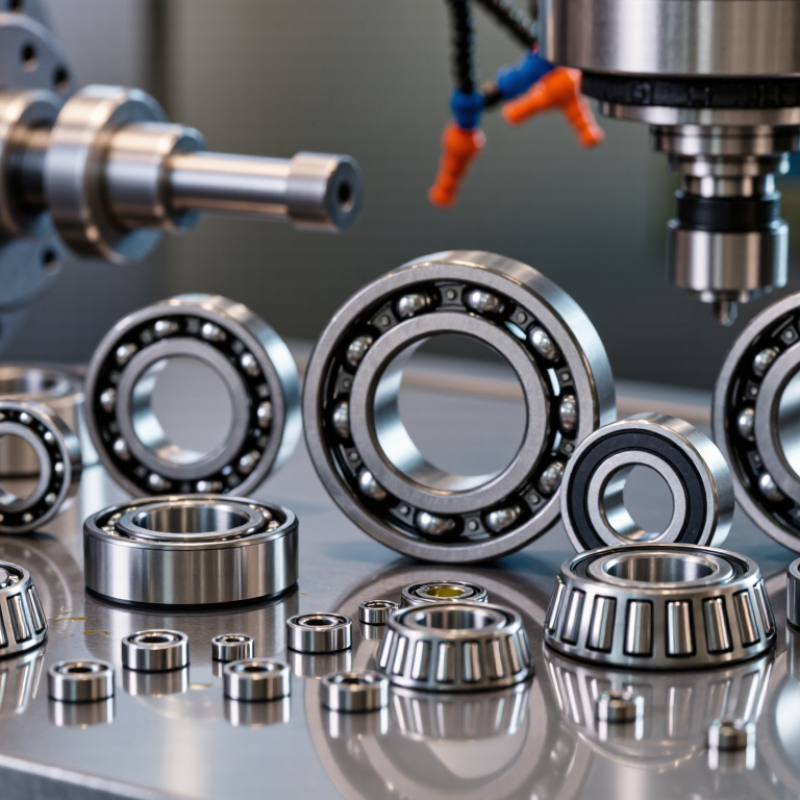
China Top 10 Precision Ball Bearings Manufacturers

Definition and Role of Precision Ball Bearings in China

Precision ball bearings are engineered components that reduce friction while preserving positional accuracy. Their races and rolling elements are manufactured with extremely small geometric deviations. ISO 492 classifies bearing accuracy through dimensional tolerance and running accuracy. In practice, higher grades support faster rotation, lower vibration, and tighter motion control. They serve machine tools, industrial robots, medical equipment, aerospace systems, and electric drives across China.

Demand is not only about volume. Grand View Research estimated the global ball-bearing market at approximately US$13 billion in 2023, with continued growth through 2030. China remains a major production and consumption center, supported by automation, electric vehicles, and precision machinery. China Bearing Industry Association statistics also show sustained expansion in bearing output and exports, although broad totals include standard products. That distinction matters.

A precision bearing may look simple, yet its performance depends on steel cleanliness, heat treatment, grinding accuracy, lubricant selection, and assembly control. A few micrometers of error can create heat, noise, or premature wear. Testing should therefore examine radial runout, rotational torque, vibration, and fatigue life under realistic loads. The choice is application-specific. “Precision” alone proves little. Some published specifications remain difficult to compare because test conditions differ. Independent inspection and traceable quality records provide stronger evidence than catalog claims.

Key Standards for Evaluating Chinese Bearing Manufacturers

Evaluating China’s top precision ball bearing manufacturers requires more than production volume. The China Bearing Industry Association’s 2023 industry statistics reported Chinese bearing output above 20 billion units. That scale shows capacity, not precision. A reliable shortlist should examine dimensional control, material consistency, process stability, and after-sales traceability.

Start with standards. ISO 492 defines dimensional and geometric tolerances for radial bearings. ISO 281 supports rating-life calculations, while ISO 199 addresses static load ratings. Chinese standard GB/T 307.1 should also appear in technical documents. Ask for inspection records, not general certificates. Check bore variation, radial runout, surface roughness, vibration levels, and hardness results. Cpk values above 1.33 are a useful process signal, although one reported figure cannot prove long-term stability.

Testing depth matters. Independent laboratory reports should cover fatigue, lubricant compatibility, temperature performance, and contamination resistance. The Mordor Intelligence Bearings Market report published in 2024 projected roughly 5% annual global growth through 2029. Growth increases supply options, but it can also encourage rushed quality claims. That deserves caution. The China Association for Quality’s manufacturing guidance also emphasizes traceability and statistical process control. Review heat-treatment batches, steel certificates, calibration dates, and corrective-action records. A factory visit can reveal practical details: clean assembly rooms, sealed packaging, controlled storage, and operators checking gauges before production. No evaluation is perfect. Supplier rankings can still mislead when audit evidence is incomplete.

China Top 10 Precision Ball Bearings Manufacturers - Key Standards for Evaluating Chinese Bearing Manufacturers
Rank Anonymous Manufacturer Profile Primary Product Scope Typical Precision Grades Applicable Product Standards Quality Management Evidence Material and Heat-Treatment Control Metrology and Inspection Capability Typical Application Focus Evaluation Score
01 Profile A — High-Precision Spindle Specialist Angular-contact ball bearings, super-precision miniature bearings, matched sets P4, P2; ABEC-7 to ABEC-9 equivalents where specified ISO 492; GB/T 307.1; ISO 199 for axial dimensions ISO 9001 documented
Lot traceability and process capability records
Controlled bearing steel sourcing; vacuum or controlled-atmosphere heat treatment; hardness verification Roundness, waviness, vibration, preload, friction torque and dimensional inspection Machine tools, grinding spindles, robotics and semiconductor equipment 94 / 100
★★★★★
02 Profile B — Automotive-Grade Production Specialist Deep-groove ball bearings, wheel bearings, tensioner and alternator bearings P0, P6, P5; application-specific noise and vibration grades ISO 492; ISO 281; GB/T 307.1 IATF 16949 aligned
APQP, PPAP and failure-analysis processes
Clean-steel controls; controlled carburizing or through-hardening; residual-stress monitoring Automated dimensional gauging, noise testing, life testing and contamination control Passenger vehicles, commercial vehicles, electric motors and auxiliary systems 93 / 100
★★★★★
03 Profile C — Large-Volume Standard Bearing Producer Single-row and double-row deep-groove ball bearings, shielded and sealed designs P0, P6, P5 ISO 492; ISO 199; GB/T 307.1 ISO 9001 documented
Incoming, in-process and final inspection plans
Documented steel-mill certificates; heat-treatment batch records; seal material verification Profile, noise, vibration, radial clearance, seal drag and grease-fill checks Electric motors, pumps, fans, conveyors and general industrial equipment 91 / 100
★★★★★
04 Profile D — Ceramic and Hybrid Bearing Specialist Hybrid angular-contact and deep-groove bearings with ceramic rolling elements P5, P4; application-specific preload classes ISO 492; ISO 281; GB/T 307.1 ISO 9001 documented
Design validation and batch traceability
Certified bearing steel; silicon-nitride ball inspection; controlled grinding and lapping Ball sphericity, raceway geometry, electrical resistance, vibration and temperature-rise testing High-speed motors, vacuum equipment, machine tools and aerospace auxiliaries 90 / 100
★★★★★
05 Profile E — Miniature and Instrument Bearing Specialist Miniature deep-groove, flanged, stainless-steel and thin-section bearings P6, P5; selected P4 production capability ISO 492; ISO 199; GB/T 307.1 ISO 9001 documented
Clean assembly and controlled packaging
Stainless and bearing-steel material certification; small-part heat-treatment control Micrometre-level dimensional measurement, torque, noise, clearance and seal inspection Medical instruments, encoders, small motors, office equipment and consumer devices 88 / 100
★★★★☆
06 Profile F — Electric-Motor Bearing Specialist Low-noise deep-groove bearings, insulated and electrically resistant configurations P0, P6, P5 ISO 492; ISO 281; GB/T 307.1 ISO 9001 documented
Noise-class and reliability control plans
Steel cleanliness verification; controlled heat treatment; grease compatibility testing Acoustic testing, vibration analysis, electrical insulation testing and temperature-rise testing Industrial motors, generators, compressors, pumps and electric vehicles 87 / 100
★★★★☆
07 Profile G — Industrial Customization Specialist Non-standard radial bearings, special clearances, custom seals and modified cages P0, P6; customer-defined tolerance classes ISO 492; ISO 281; ISO 199 where applicable ISO 9001 documented
Engineering change and drawing-control procedures
Material certificates and supplier audits; controlled heat-treatment outsourcing or in-house batches Coordinate measurement, clearance, load testing, seal performance and endurance verification Gearboxes, agricultural machinery, material handling and special-purpose equipment 85 / 100
★★★★☆
08 Profile H — Stainless and Corrosion-Resistant Bearing Specialist Stainless-steel radial bearings, sealed bearings and corrosion-resistant assemblies P0, P6, P5 ISO 492; ISO 281; GB/T 307.1 ISO 9001 documented
Corrosion and seal-performance records
Stainless-steel grade verification; passivation control; grease and seal compatibility testing Dimensional inspection, corrosion exposure, torque, leakage and vibration testing Food-processing machinery, chemical equipment, marine systems and clean environments 84 / 100
★★★★☆
09 Profile I — Heavy-Duty Industrial Bearing Specialist Large-bore deep-groove, four-point-contact and reinforced ball bearings P0, P6; selected P5 capability ISO 492; ISO 281; ISO 199 ISO 9001 documented
Load-rating calculations and product traceability
Large-section steel certification; heat-treatment uniformity and hardness-depth records Large-bearing geometry, radial clearance, static load and endurance inspection Steel equipment, cranes, gearboxes, machine tools and heavy industrial systems 82 / 100
★★★★☆
10 Profile J — Export-Oriented General Bearing Supplier Metric and inch-series deep-groove bearings, sealed and shielded standard designs P0, P6; selected P5 capability ISO 492; ISO 199; GB/T 307.1 ISO 9001 documented
Export inspection and batch documentation
Supplier material certificates; standard heat-treatment records; seal and grease checks Dimensional, clearance, noise, vibration and packaging inspection Replacement parts, agricultural equipment, pumps, motors and distributors 80 / 100
★★★★☆
Evaluation framework: precision and dimensional conformity are referenced to ISO 492, ISO 199 and GB/T 307.1; bearing life evaluation is referenced to ISO 281. Scores are normalized benchmark values based on manufacturing capability, process control, inspection depth, traceability and application suitability. Manufacturer-specific certification and test records should be verified before procurement.

Leading China-Based Precision Ball Bearing Manufacturers

China Top 10 Precision Ball Bearings Manufacturers

Leading China-Based Precision Ball Bearing Manufacturers

China-based precision ball bearing manufacturers serve demanding sectors, including robotics, medical equipment, machine tools, and aerospace support systems. The strongest suppliers usually combine controlled production, accurate inspection, and responsive engineering support. Their capabilities may include angular contact bearings, miniature bearings, ceramic hybrid designs, and customized preload solutions.

During supplier evaluations, buyers should examine more than catalog specifications. A reliable manufacturer can explain steel grades, heat treatment, grinding methods, and cage materials in practical terms. Inspection records should show radial runout, axial runout, noise levels, vibration, and dimensional consistency. Traceability also matters. Each batch should connect clearly to raw materials, operators, equipment, and final testing.

Factory visits can reveal important details. Look for clean assembly areas, calibrated measuring equipment, stable temperature control, and trained inspection staff. Certificates help, but they do not replace production evidence. No factory is flawless. Small variations can appear after shipping, installation, or changes in operating temperature. That is why experienced manufacturers discuss lubrication, shaft tolerance, housing fit, and service life before confirming a design.

The top ten candidates should be compared through sample testing, technical communication, delivery records, and after-sales response. A lower price may hide higher replacement costs. Careful buyers should request drawings, test reports, packaging details, and realistic lead times. Good suppliers welcome these questions, although some published data may still require independent verification.

Manufacturing Technologies and Quality Control Practices

China Top 10 Precision Ball Bearings Manufacturers: Manufacturing Technologies and Quality Control Practices

Precision ball bearing production begins with clean steel, stable heat treatment, and controlled grinding. Grand View Research estimates that the global bearing market reached about USD 123 billion in 2022. This scale increases pressure on Chinese manufacturers to improve consistency, not only output.

Modern plants use CNC grinding, superfinishing, automated assembly, and laser measurement systems. In a typical inspection room, probes check bore diameter within micrometre-level tolerances. Cameras also detect scratches, dents, and incorrect cage placement. Surface roughness matters. A polished raceway reduces friction, while poor finishing can create heat and vibration.

Quality teams commonly apply ISO 281 for rating life calculations and ISO 15243 for failure classification. ISO 10012 supports reliable measurement management. Statistical process control tracks diameter, roundness, noise, and rotational torque across production batches. A bearing may pass dimensional inspection yet fail a noise test. That detail is easy to miss.

According to a 2023 industry analysis by MarketsandMarkets, demand is growing through automation, electric mobility, and high-speed machinery. These applications require tighter control over lubrication, sealing, and material cleanliness. Traceability links each bearing to its steel batch, furnace cycle, operator, and inspection record.

No factory gets every reading perfect. That is the uncomfortable part. Human handling, sensor drift, and sampling limits still create risk. Strong manufacturers respond with calibration audits, endurance testing, and corrective-action reviews instead of relying on final inspection alone.

Applications and Selection Factors for Precision Ball Bearings

China Top 10 Precision Ball Bearings Manufacturers

Precision ball bearings support machine tools, medical equipment, robotics, electric motors, and aerospace systems. Their value depends on accuracy, stiffness, speed, and operating stability. Grand View Research reported that the global ball bearing market was valued at approximately USD 18.9 billion in 2023. Demand is rising with factory automation and electric mobility. However, market growth does not remove selection risks.

Choose the bearing after checking load direction, speed, temperature, contamination, and available space. Angular-contact bearings suit combined radial and axial loads. Deep-groove designs work well in motors and general machinery. For high-speed spindles, ceramic rolling elements can reduce heat and centrifugal force. ISO 281 calculations help estimate rating life, but real service life may be shorter. Poor lubrication, shaft misalignment, and vibration often change the result. I have seen designs fail because catalog load data seemed sufficient, while installation conditions were ignored.

Tips: Compare dynamic load ratings under the actual duty cycle. Check clearance, preload, seal design, and lubricant compatibility. Ask for inspection records, material certificates, and dimensional test data. Reports from the International Organization for Standardization emphasize consistent measurement practices, yet precision claims still need verification. A useful trial includes temperature monitoring, vibration testing, and noise checks after installation. Small deviations matter. Recheck the assumptions before approving volume production.

China Top 10 Precision Ball Bearings Manufacturers: Applications and Selection Factors

The chart presents a representative engineering screening index from 1 to 5. Accuracy class and speed capability are especially important for machine-tool spindles, robotics, aerospace equipment, and precision instruments, while load rating and stiffness become more critical in industrial machinery. Final bearing selection should also consider ISO precision class, operating temperature, lubrication, preload, sealing, shaft fit, and service environment.

FAQS

What are precision ball bearings?

They reduce friction while maintaining accurate movement. Their races and rolling elements have very small geometric deviations. Even a few micrometres can affect heat, noise, and wear.

Where are precision ball bearings used?

Common applications include machine tools, robots, medical equipment, electric motors, and aerospace systems. Each application needs different speed, stiffness, load capacity, and temperature control.

How is bearing accuracy measured?

Accuracy includes dimensional tolerance and running accuracy. Inspections may check radial runout, rotational torque, vibration, bore diameter, and surface roughness. A bearing can pass size checks but still produce excessive noise.

Which manufacturing steps affect bearing performance?

Clean steel, stable heat treatment, accurate grinding, and controlled assembly are essential. Superfinishing creates smoother raceways. Poor handling or a small surface defect can increase friction quickly.

How should buyers compare precision bearing suppliers in China?

Request material certificates, dimensional reports, inspection records, and traceability details. Strong records can link a bearing to its steel batch and furnace cycle. Catalog claims alone are not enough.

How do application conditions influence bearing selection?

Check load direction, speed, temperature, contamination, available space, and alignment. Angular-contact designs suit combined loads. Deep-groove designs often support motors and general machinery.

Are calculated bearing life and real service life always the same?

No. Calculated life uses assumed loads and operating conditions. Poor lubrication, vibration, misalignment, or contamination can shorten actual service life. The estimate may look precise, but the assumptions may be weak.

What testing should follow installation?

Monitor temperature, vibration, noise, and rotational behavior during realistic operation. Test the actual duty cycle when possible. I would not approve large-scale production after paperwork alone.

What quality risks should buyers remember?

Sensor drift, sampling limits, and human handling can create unnoticed variation. Calibration audits and endurance tests reduce these risks. No production line gets every reading perfect.

Conclusion

Precision Ball Bearings are engineered components designed to support rotating parts with exceptional accuracy, low friction, and stable performance. In China, they are widely used in automation equipment, machine tools, robotics, medical devices, aerospace systems, electric motors, and other high-precision applications. This article explains their role and value while outlining the main factors used to evaluate manufacturers, including dimensional accuracy, load capacity, operating speed, material quality, production consistency, certification, and delivery reliability.

It also introduces leading China-based manufacturing capabilities without focusing on specific brands, highlighting advanced grinding, superfinishing, automated assembly, cleanliness control, and comprehensive testing procedures. Readers will learn how manufacturers manage quality through process monitoring, inspection equipment, traceability, and performance verification. The article concludes with practical selection guidance, helping users match bearing size, clearance, precision grade, lubrication, sealing design, operating environment, and service requirements to their applications.

Oliver

Oliver

Oliver is a seasoned marketing professional with a wealth of expertise in driving brand awareness and engagement. With a deep understanding of our company's product offerings, he consistently delivers high-quality content that enriches our professional blog. His insights not only shed light on......