Deep Groove Roller Bearings are essential components in various industries. They have a wide application, from electric motors to automotive systems. According to the Global Bearings Market Report, the deep groove bearing segment accounts for about 45% of the entire market share. This highlights their importance in mechanical performance.
Quality is critical in this field. Buyers often prioritize reliability and durability. Research from Markets and Markets indicates that the demand for these bearings is growing, driven by advancements in technology and manufacturing. Companies are looking for suppliers who can provide top-notch products that meet stringent industry standards.
However, not all suppliers are created equal. Some may lack the technical expertise needed for optimal performance. This poses a risk, as inferior bearings can lead to increased maintenance costs and reduced efficiency. Therefore, it's important for global buyers to carefully evaluate their options when selecting Deep Groove Roller Bearings.
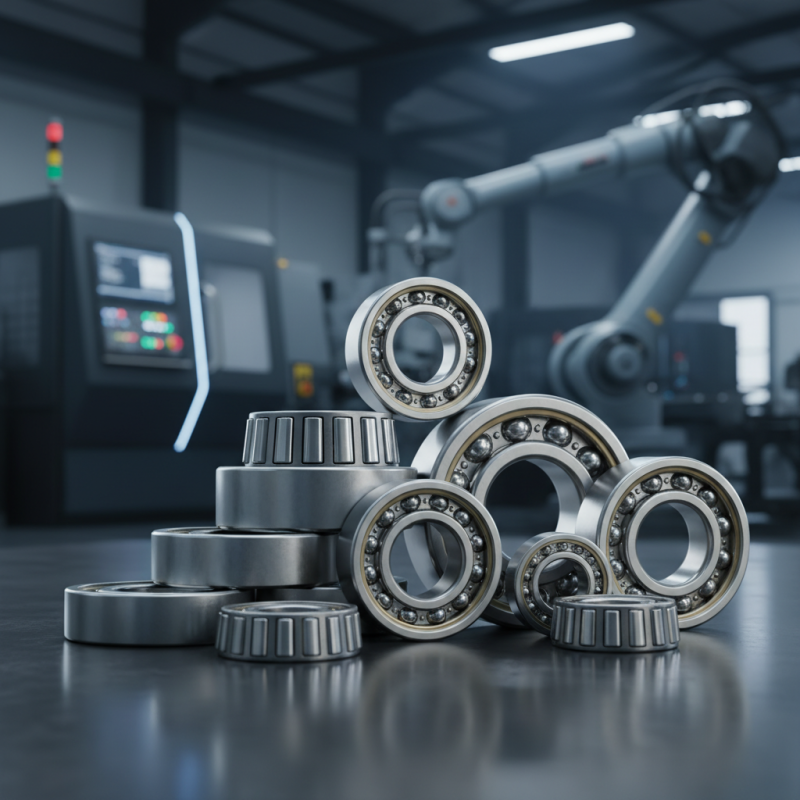
Types of Deep Groove Roller Bearings and Their Applications
Deep groove roller bearings are essential components in various machinery. They come in different types, each suited for specific applications. The most common types include single-row, double-row, and angular contact deep groove bearings. Each type offers unique advantages based on load capacity and design.
Single-row bearings are widely used in electric motors and automotive applications. They handle radial loads efficiently. Double-row bearings, on the other hand, provide increased load capacity. They are often found in heavy machinery and industrial equipment. Angular contact deep groove bearings manage both axial and radial loads. This makes them ideal for high-speed applications, like in machine tools.
Choosing the right bearing type requires careful consideration. Factors include load specifications, speed requirements, and working environment. Not all bearings fit every need, leading to potential performance issues. Balancing these factors can be challenging but crucial for optimal machinery function. Manufacturers should invest time in understanding their specific requirements before purchasing.
Key Manufacturers of Deep Groove Roller Bearings Worldwide
Deep groove roller bearings are essential components in various mechanical systems. Their design allows for smooth rotation and minimal friction, making them ideal for applications in motors, gearboxes, and industrial machines. According to a recent market analysis, the global bearing market is projected to exceed $100 billion by 2026, with deep groove bearings representing a significant portion of this growth.
Key manufacturers in this sector demonstrate a wide array of innovations. These companies focus on improving load capacity and durability, which directly impacts performance. Notably, the production process is complex. It involves precise machining and advanced materials like ceramics and polymer composites. Some manufacturers report that despite advancements, supply chain challenges can hinder timely delivery. This inconsistency can lead to operational delays for manufacturers relying on these critical components.
Additionally, energy efficiency is becoming a driving force in the development of deep groove roller bearings. A study indicated that the adoption of high-quality bearings could reduce energy consumption by up to 30%. However, not all products in the market meet the high standards required. Buyers must investigate quality certifications and testing standards to ensure reliability. A careful review is essential to avoid compromising equipment lifespan and efficiency.
Factors to Consider When Choosing Deep Groove Roller Bearings
When selecting deep groove roller bearings, buyers should consider several key factors. One significant aspect is load capacity. According to recent industry reports, the load rating of bearings can differ widely, ranging from 1000 to 500,000 N. Buyers need to assess their application requirements carefully. Insufficient load capacity may lead to
Another important factor is the material composition. Steel and ceramic are two prominent materials used in roller bearings. Each possesses distinct advantages. For instance, ceramic bearings have superior corrosion resistance and lower friction. However, they often come at a higher price. The right choice depends on the specific operational environment.
Bearing size and dimension are also critical. Demand for precision in size is growing. Many buyers are noticing that even small discrepancies can lead to significant performance issues. A recent survey indicated that 65% of engineers have faced issues related to improper bearing fit. This emphasizes the need for meticulous measurement and consideration of tolerances in bearing selection.
Advantages of Deep Groove Roller Bearings in Various Industries
Deep groove roller bearings are essential components in various industries, playing a crucial role in machinery and equipment. Their design enables them to handle both radial and axial loads, making them highly versatile. According to a recent report by ResearchAndMarkets, the global bearing market is projected to reach USD 92.3 billion by 2025. This growth is driven by the rising demand for efficient machinery in manufacturing and automotive sectors.
In industrial applications, deep groove roller bearings reduce friction, increasing operational efficiency. This is particularly significant in high-speed machinery, where even minor inefficiencies can lead to substantial energy losses. A study from the American Society of Mechanical Engineers highlighted that proper bearing selection and maintenance can improve energy efficiency by up to 20%. This reduction in energy consumption not only lowers costs but also contributes to sustainability goals.
However, not all applications benefit equally from deep groove roller bearings. Factors like load conditions and environmental factors can impact performance. In abrasive environments, for example, bearings may require additional protective measures to maintain longevity. Regular maintenance and monitoring are imperative to avoid premature failures. Balancing costs with performance and reliability is a challenge that many companies face. As the industry evolves, innovations in bearing materials and designs continue to emerge, promising enhanced capabilities for future applications.
Trends and Innovations in Deep Groove Roller Bearing Technology
Deep groove roller bearings are vital in many industries. The latest trends show a shift toward higher efficiency and reliability. According to a recent report by MarketsandMarkets, the global bearing market is expected to reach $72.3 billion by 2026, with deep groove bearings contributing significantly to this growth. Innovations in material science are enabling manufacturers to produce bearings that have enhanced load capacity and durability. For instance, the introduction of hybrid ceramic ball bearings has been a game-changer, offering improved performance under extreme conditions.
Moreover, manufacturers are focusing on reducing friction. This can lead to lower energy consumption and longer service life. Research indicates that innovative coatings, such as nanostructured surfaces, can decrease wear rates by up to 50%. However, integrating new technologies can be challenging. Industry leaders often face hurdles like cost management and adapting existing machinery to accommodate new designs. These obstacles require careful planning and strategic investments, highlighting the complexity of modern manufacturing processes.
The rise of smart technologies is another noteworthy trend. Bearings are now being designed with IoT capabilities. This allows for predictive maintenance and real-time monitoring. However, some small to medium enterprises may struggle to adopt such advanced systems. Balancing innovation with practicality remains a central question for many in the industry.
Top Deep Groove Roller Bearings Market Trends
The chart above illustrates the sales volume of various deep groove roller bearing sizes in the global market. As seen, Bearing Size 6300 has the highest sales volume, indicating its popularity among buyers. Trends show a growing demand for specific sizes, which is crucial for manufacturers to focus on in the coming years.
FAQS
: They are used in various industries, crucial for machinery and equipment.
They reduce friction, increasing operational efficiency, especially in high-speed machinery.
No, performance can vary based on load and environmental conditions.
In abrasive environments, they may require extra protection to maintain longevity.
Proper maintenance can prevent premature failures and improve overall performance.
New materials and hybrid designs increase load capacity and durability.
It leads to lower energy consumption and a longer service life.
Integrating new designs can be costly and require machinery adaptations.
Yes, IoT capabilities allow for predictive maintenance and real-time monitoring.
They may struggle to adopt advanced technologies due to balancing innovation and practicality.
Conclusion
Deep Groove Roller Bearings are essential components in various industrial applications due to their versatility and efficiency. This article delves into the different types of deep groove roller bearings and their specific applications across industries. It highlights key manufacturers around the globe, providing insights into the market landscape.
When choosing deep groove roller bearings, several factors such as load capacity, speed ratings, and environmental conditions must be considered. The advantages of these bearings, including reduced friction and increased durability, make them a preferred choice in sectors like automotive, aerospace, and manufacturing. Finally, the article discusses emerging trends and innovations in deep groove roller bearing technology, which are shaping the future of bearing solutions.
 Sill Bearing
