 Sill Bearing
Sill Bearing
Sill Bearing
Choosing the right Stainless Bearing in 2026 requires more than comparing prices on a supplier website. Global buyers must evaluate material grade, sealing quality, load capacity, corrosion resistance, and documented manufacturing control. A polished product page is not proof of consistent performance. Real reliability appears in test reports, traceable batches, clear tolerances, and honest technical communication.
This guide examines stainless steel bearings for food equipment, marine systems, laboratory devices, packaging lines, and outdoor machinery. Each application creates different demands. A bearing exposed to salt spray needs stronger corrosion protection than one used inside a clean, dry instrument. Buyers should check whether the bearing uses stainless steel rings, suitable cage materials, and seals that match operating temperatures. Small details matter.
Ask practical questions.
Can the supplier provide dimensional drawings? Are fatigue ratings supported by testing? Does the quoted delivery time reflect actual production capacity? These questions often reveal more than promotional claims. Experience also shows that “stainless” does not always mean fully corrosion-proof. Contamination, poor lubrication, incorrect installation, and stagnant moisture can still cause early failure.
This article compares leading options expected to serve global buyers in 2026. It considers performance, certification, customization, after-sales support, and total ownership cost. The strongest choice may not be the cheapest bearing or the highest-rated model. In some cases, a simpler design performs better because maintenance teams understand it. That point is easy to overlook. Buyers should verify regional requirements, supplier records, and application data before placing an order. No universal bearing fits every environment.
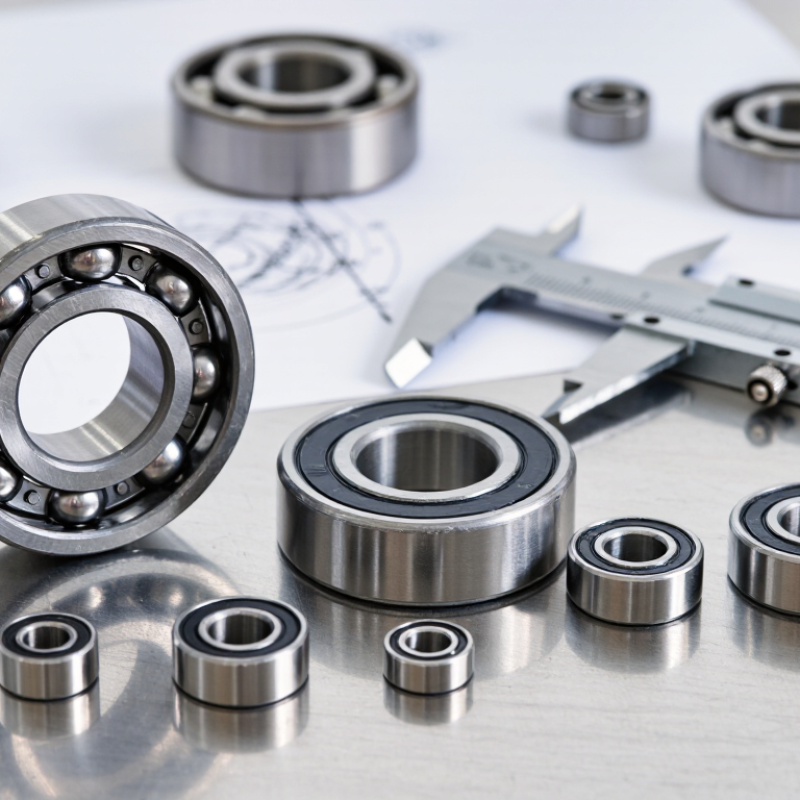
A stainless steel bearing uses hardened inner and outer rings, rolling elements, and a cage to guide motion. The steel’s chromium content helps form a protective surface layer when exposed to oxygen. This can slow corrosion in damp or frequently washed environments. It does not make the bearing rustproof. Salt, harsh chemicals, and trapped moisture can still damage surfaces.
Material grade affects corrosion resistance, hardness, and load capacity. A bearing suited to a light-duty pump may not tolerate the same load or speed as one in a heavy conveyor. Check the rated load, operating speed, temperature range, and lubricant requirements against actual working conditions. Small details matter. A seal that limits water entry can also increase friction, while an unsuitable lubricant may wash out during cleaning.
In practice, inspect the bearing after installation and during scheduled maintenance. Look for discoloration, rough rotation, unusual noise, or water inside the housing. These signs do not identify a single cause, but they help guide further checks. Stainless steel bearings can offer useful corrosion resistance, yet their performance depends on the complete setup, not just the material name. I would not choose one from a product description alone; the operating environment deserves a closer look.
Match the bearing to the load direction. Deep-groove types suit radial loads and moderate speeds. Angular-contact types handle combined radial and axial forces. Thrust bearings mainly carry axial loads. Check the real duty cycle, not only the catalog description.
No. “Stainless” is not corrosion-proof. Alloy, surface finish, seals, moisture, and cleaning chemicals all matter. Salt spray and frequent washdowns need extra material care. I once trusted the label too much.
Common stainless grades balance corrosion resistance, hardness, and cost differently. Mild moisture may need a suitable stainless race and rolling elements. Salt exposure may require a more resistant material. Ask for the exact material grade.
Contact seals block more water and dust but increase friction. Shields usually reduce friction but may offer less protection. Open bearings need a clean, controlled housing. A wet pump area needs more protection than a dry conveyor.
Dynamic ratings relate to rotating fatigue life. Static ratings address deformation during rest or impact. Compare both ratings with load, speed, temperature, and service hours. A large rating alone is not a guarantee.
Request material certificates, batch identification, dimensional inspection records, and calibration details. Match bearing markings with the documents. Check dimensions using a calibrated micrometer. Paperwork helps, but paperwork is not proof.
Test samples under realistic conditions when possible. Check rotation, finish, dimensions, and unusual noise. Ask how the supplier controls changes and handles defective parts. One sample cannot reveal every production variation. Still, it can expose important questions.
Include freight, duties, minimum order quantities, and replacement lead times. A low unit price can hide costly delays. Confirm batch identification and defect handling in writing. Cheap can become expensive.
Keep them sealed, dry, and away from dust. Use clean tools during installation. Do not strike the rings directly. Follow the recommended lubrication guidance. Record noise, heat, and vibration after startup.
Use an inspection log for temperature, vibration, noise, and visible contamination. Review the bearing after demanding wash cycles. Maintenance schedules are useful, but not perfect. Actual wear can change with load and moisture.
This guide explains the fundamentals of stainless steel bearings, including how their construction and material properties affect corrosion resistance, durability, friction, and performance in demanding environments. It compares common bearing types, seals, and load ratings, helping readers understand how to match a Stainless Bearing to operating conditions such as speed, load, temperature, moisture, and maintenance access.
For global buyers in 2026, the article also outlines practical ways to assess products and suppliers, from reviewing applicable standards and certifications to checking manufacturing consistency, traceability, and quality documentation. Its buying guidance considers pricing beyond the initial purchase, sourcing factors such as lead times and order requirements, and maintenance practices that can support reliable service life. By weighing application needs, verified specifications, supplier quality, and long-term costs, buyers can make more informed purchasing decisions.
